Scaling CVE Assessments with AI Agents: Part 2 – Implementation Deep Dive
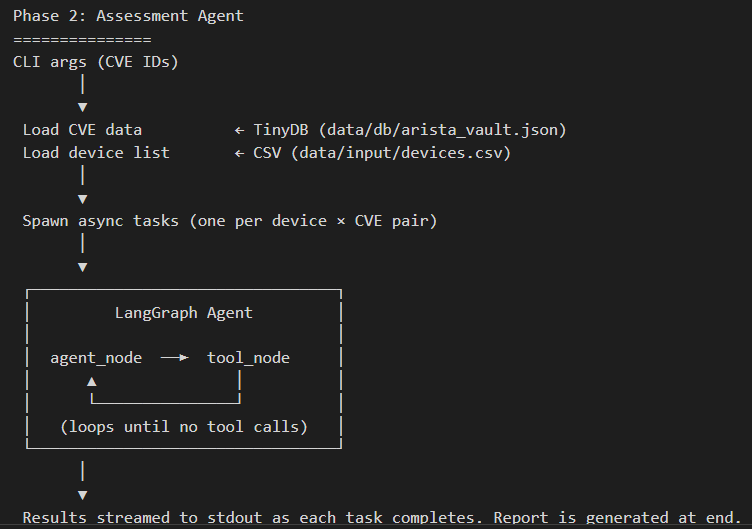
In Part 1, we explored why traditional vulnerability scanning often falls short due to high false-positive rates and manual correlation. Today, we move into the Software/AI Defined implementation, breaking down the Python architecture that enables our autonomous intelligence pipeline. 1. Phase 1: Building the Extraction Pipeline The goal of Phase 1 is to turn unstructured vendor advisories into a machine-readable database. Intelligence Scraping with crawl4ai The foundation of a context-aware assessment is high-fidelity data. We use crawl4ai to navigate the Arista Security Advisory portal. The tool handles the complexities of modern web rendering and delivers a clean Markdown version of the advisory to our extraction agent. Structured Extraction with Pydantic To ensure the LLM outputs are reliable, we define a strict model that acts as a blueprint for the extracted data. Python class Vulnerability(BaseModel): cve: str = Field(description="CVE identifier, e.g. CVE-2024-1234") affected_os: List[str] = Field(description="Affected EOS versions") affected_platforms: List[str] =…